

Household Earthquake Preparedness | Part 2 of 2
Our Before the Shaking guide covers securing your home, putting a bed kit within reach and choosing a household contact. This second part covers what to do after the shaking stops: recognize immediate danger, check people and use the plan you prepared.
You can read this guide on its own or work through both parts with your household before an earthquake happens.
When the shaking stops, the first question is whether you and the people around you are in immediate danger. Look for injuries, fire, damaged buildings and other hazards before moving. Be ready for aftershocks.
What comes first depends on where you are. A serious injury may need immediate attention. Fire, a suspected gas leak or a tsunami warning may mean leaving right away. Follow local emergency instructions as they become available.
Near the coast? Know the warning signs.
If you're near the coast and feel strong or long shaking, hear a loud roar from the ocean, or see the water rise or recede unusually, a tsunami may follow. As soon as the shaking stops, move to higher ground or inland immediately. Follow local evacuation routes if you know them. Don't wait for an official warning.
If authorities issue a tsunami warning for your area, evacuate as directed. Stay away from the coast until officials say it is safe to return. A tsunami can bring more than one wave.
Be ready for aftershocks
Aftershocks can follow minutes, days, weeks or even months later. If shaking starts again, Drop, Cover, and Hold On. Keep away from windows and objects that could fall. If you cannot drop to the ground, remain seated and protect your head and neck; lock wheelchair wheels if applicable.
When it is safe to move, watch for broken glass and debris. A closed bed kit secured to the bed keeps shoes and a flashlight easier to find if loose items scatter. Use the light to check your path before you move through a dark room.
Check yourself and the people around you
Check for injuries and give the help you can safely provide with the training and supplies you have. For a serious or life-threatening injury, call 911 when possible and follow the dispatcher's instructions.
If someone is trapped, don't rush into an unstable structure or attempt a rescue that puts more people in danger. Contact emergency services if you can. A trapped person may be able to text, use a whistle, or tap on a wall or pipe to help rescuers locate them. Protect the mouth, nose and eyes from dust where possible.
Move away from immediate hazards
Gas: If you smell gas, hear escaping gas or suspect a leak, leave the area. Don't use matches, lighters, appliances or light switches where a leak may be present. From a safe location, report the suspected leak to your utility or emergency services. Follow your utility's instructions; don't attempt a shutoff if you can't do it safely. If gas service is shut off, contact the utility to arrange a safety inspection and restoration; don't turn it back on yourself.
Electricity and fire: Stay away from downed power lines and damaged wires; report them to the utility. Don't touch damaged electrical equipment. If you encounter smoke or fire, leave if you can do so safely and call 911 when possible.
Buildings: Stay clear of damaged structures and falling debris. Don't reenter a damaged building until authorities say it is safe.
Contact your household and follow local information
Once immediate dangers are addressed, check local emergency alerts, an accessible radio and messages from local authorities. A text may get through when a voice call does not. Check in with the out-of-area contact your household chose in advance.
A short message can say who is with you, where you are, whether anyone needs help and where you plan to go. Having one shared contact gives the household a place to leave updates if you can't reach one another directly. If your phone isn't working, use the meeting place and backup communication plan you practiced.
Check the essentials you already have
When it is safe, account for your water, medications, lights, charged power sources and supplies for children, older adults, people with disabilities and pets. Follow local guidance about whether tap water is safe. If a private well may have been affected, follow local health-department guidance before using it.
For the advance work, including bed kits, stored supplies and alerts, use Part 1. Here, the priority is finding what you can safely reach and following current local instructions.
Practice the plan
Choose a time that works for your household. Practice Drop, Cover, and Hold On, then find your bed kit, identify a safe way out, check on each person and send a practice message to your contact. Talk through what you would do if an exit were blocked or another aftershock started. Don't operate a gas valve as part of a drill.
Read Part 1: Before the Shaking: How to Set Up Your Home for a Southern California Earthquake. Use the two guides together to check both your household setup and your response plan.
Sources: CDC: Safety Guidelines After an Earthquake; CDC: Safety Guidelines During an Earthquake; NOAA Tsunami FAQ; SoCalGas: How to Shut Off Your Natural Gas. Reviewed October 26, 2026. Follow current local emergency and utility instructions for your area.
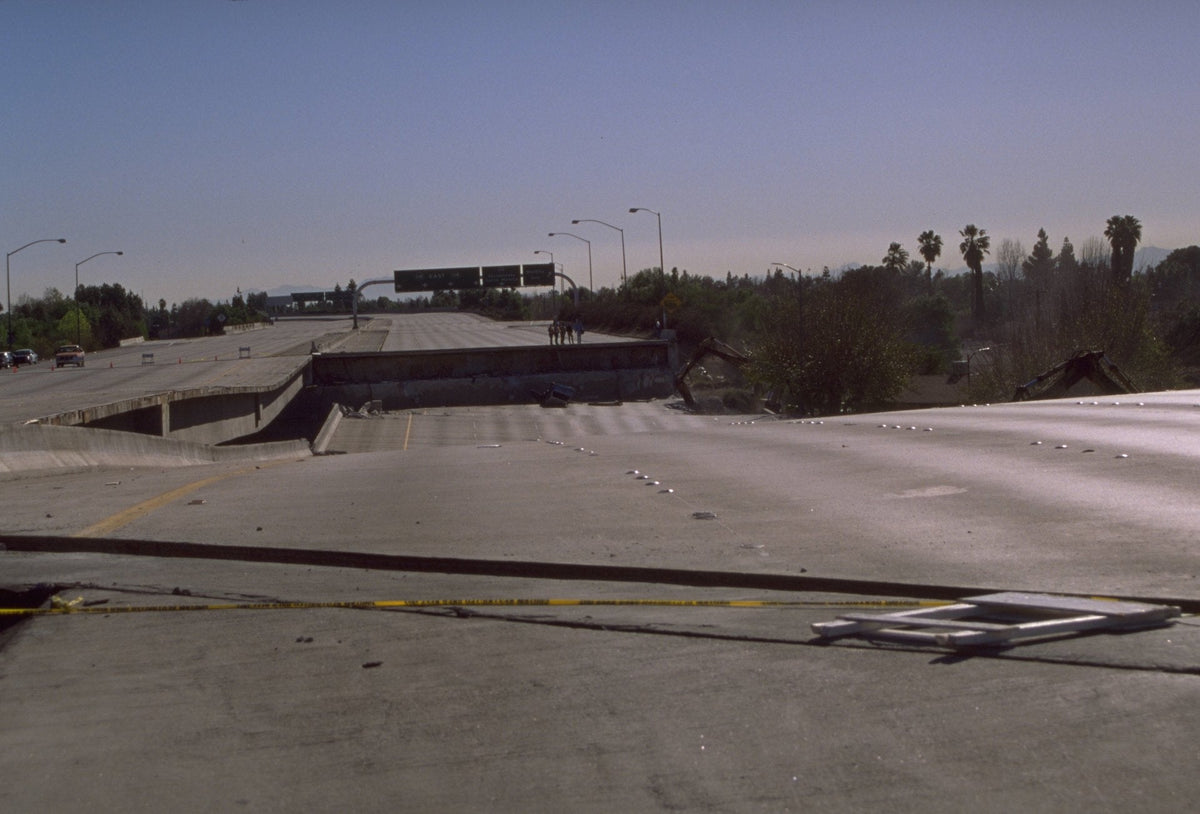
Featured image: a collapsed section of freeway after the 1994 Northridge earthquake. Photo: U.S. Geological Survey, public domain. Used across this two-part series.


