

Reporting window: Week of August 17, 2026 | Sources reviewed August 17, 2026
This briefing reflects information available at the time of review. Conditions and official instructions can change. Follow current guidance from local authorities and emergency services.
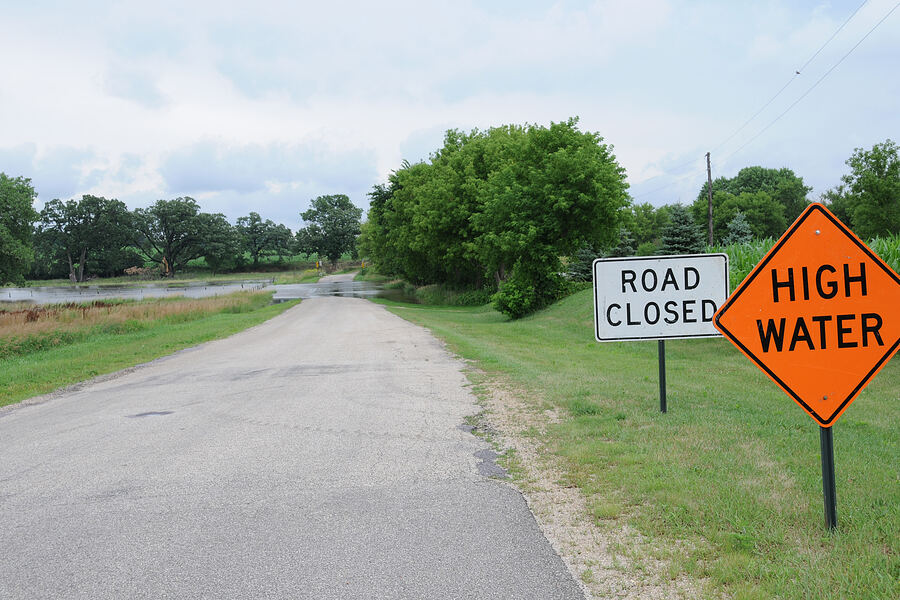
Featured photo: Walt Jennings / FEMA, 2008. Public domain in the United States. Source and rights.
Executive assessment
The useful signal this week is not any single headline. It is the overlap.
A washed-out road can quickly become a power, communications, medication, and water problem. A wildfire can create evacuation and air-quality decisions far beyond the flame front. Extreme heat can place additional strain on vehicles, household power, stored water, and the people or animals who depend on us.
You do not need a different plan for every emergency. You need a few dependable layers that still work when several ordinary systems fail together: alerts, routes, backup power, water, cleaner air, and a clear way to check on people.
U.S. situation scan
Central Indiana flooding disrupted roads and access
Repeated thunderstorms brought more than a foot of rain to parts of central Indiana between August 11 and August 17. The National Weather Service reported water rescues, washed-out roads and culverts, evacuations, and sections of the White River reaching levels not seen since 1913.
The preparedness lesson is simple: the first failure may be access, not electricity. Decide what conditions would cause you to leave, identify two routes, keep important addresses and maps available offline, and never enter a flooded roadway.
Source: National Weather Service Indianapolis, Record Flooding of August 2026. Reviewed August 17, 2026.
Wildfire and smoke require two separate checks
The National Interagency Fire Center reported 80 uncontained large fires and 28,710 personnel assigned nationwide on August 17. Multiple incidents continued to threaten homes, communities, roads, trails, and critical infrastructure, with evacuations and closures in effect.
Fire location and air quality are related, but they are not the same decision. Monitor official evacuation information and the Air Quality Index separately. Keep your vehicle fueled, maps available offline, identification and medications ready, and a cleaner-air option available indoors.
Sources: National Interagency Fire Center, National Fire News, August 17, 2026; AirNow Fire and Smoke resources, accessed August 17, 2026.
Heat planning is also water and power planning
NOAA's Climate Prediction Center identified a high risk of extreme heat for parts of the Southern and Central Plains on August 25 and 26, with a broader moderate risk extending through August 28.
Separately, the Environmental Protection Agency released a new checklist focused on water-system issues that can develop into service disruptions, including source capacity limits, malfunctioning treatment equipment, and frequent water-main breaks.
For the vehicle, check water, shade, charging capacity, medications, and pet supplies. At home, pair stored potable water with clean containers, a filtration or purification method, and a way to receive utility advisories.
Sources: NOAA Climate Prediction Center, U.S. Week-2 Hazards Outlook, August 17, 2026; U.S. EPA, drinking-water systems checklist, August 13, 2026.
World watch
European wildfire response shows the value of a prepared network
The European Union moved aircraft, helicopters, firefighters, vehicles, and satellite-mapping support across borders after Belgium and Spain requested assistance with active wildfires.
The household lesson is not about matching government resources. It is about coordination. Decide who checks on whom, who has access to the home, who can transport pets, and where everyone reconnects if normal communications fail.
Source: EU Civil Protection and Humanitarian Aid Operations, August 17, 2026.
The readiness pattern
Prepare for the overlap, not the headline.
Most households do not need a separate plan for every possible event. Build layers that still work when power, roads, water, air quality, or cellular service fail together. Practice the first decision before the pressure is on.
What to check this week
- Confirm two departure routes and the condition that tells you it is time to leave.
- Charge primary and backup lights, power banks, radios, and the cables that connect them.
- Audit stored water, clean containers, filtration or purification, and a chemical-treatment backup.
- Check medications, pet needs, key documents, and one person who may need extra help.
Related Field Manual guides
- Navigation Without a Screen: A Practical Map, Compass, and Signaling Plan
- A Practical Communications Redundancy Plan for Home, Trail, and Convoy
- Browse the SRO Field Manual
Related readiness categories
If this week's checks reveal a gap, these categories can help you review the options. Start with the plan, then select only what supports it.
Stay Sharp. Stay Ready.


